> For the complete documentation index, see [llms.txt](https://minepro-1.gitbook.io/minepro/llms.txt). Markdown versions of documentation pages are available by appending `.md` to page URLs; this page is available as [Markdown](https://minepro-1.gitbook.io/minepro/usdmine-deflation/usdmine-as-a-deflationary-asset.md).
# $MINE as a deflationary asset
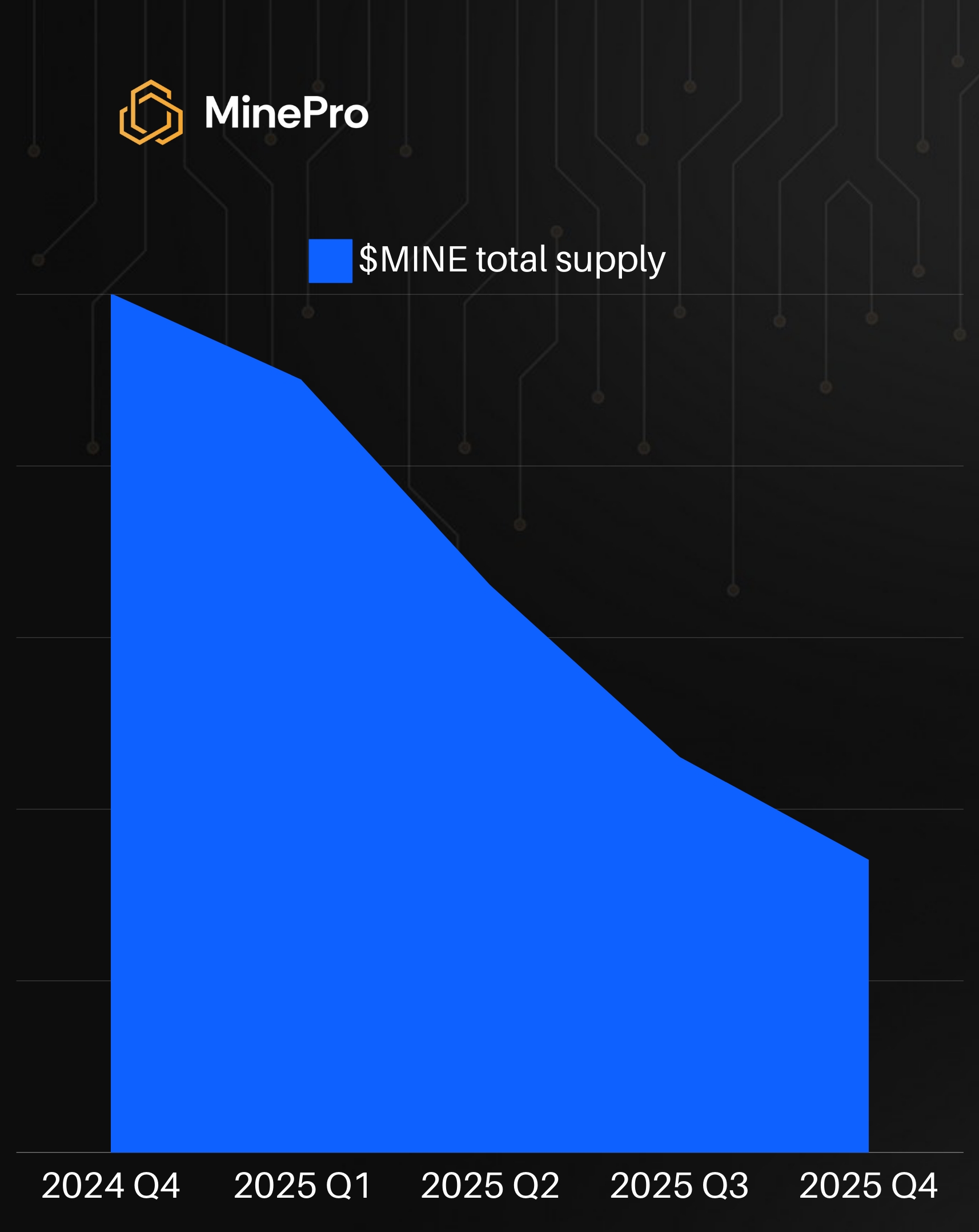
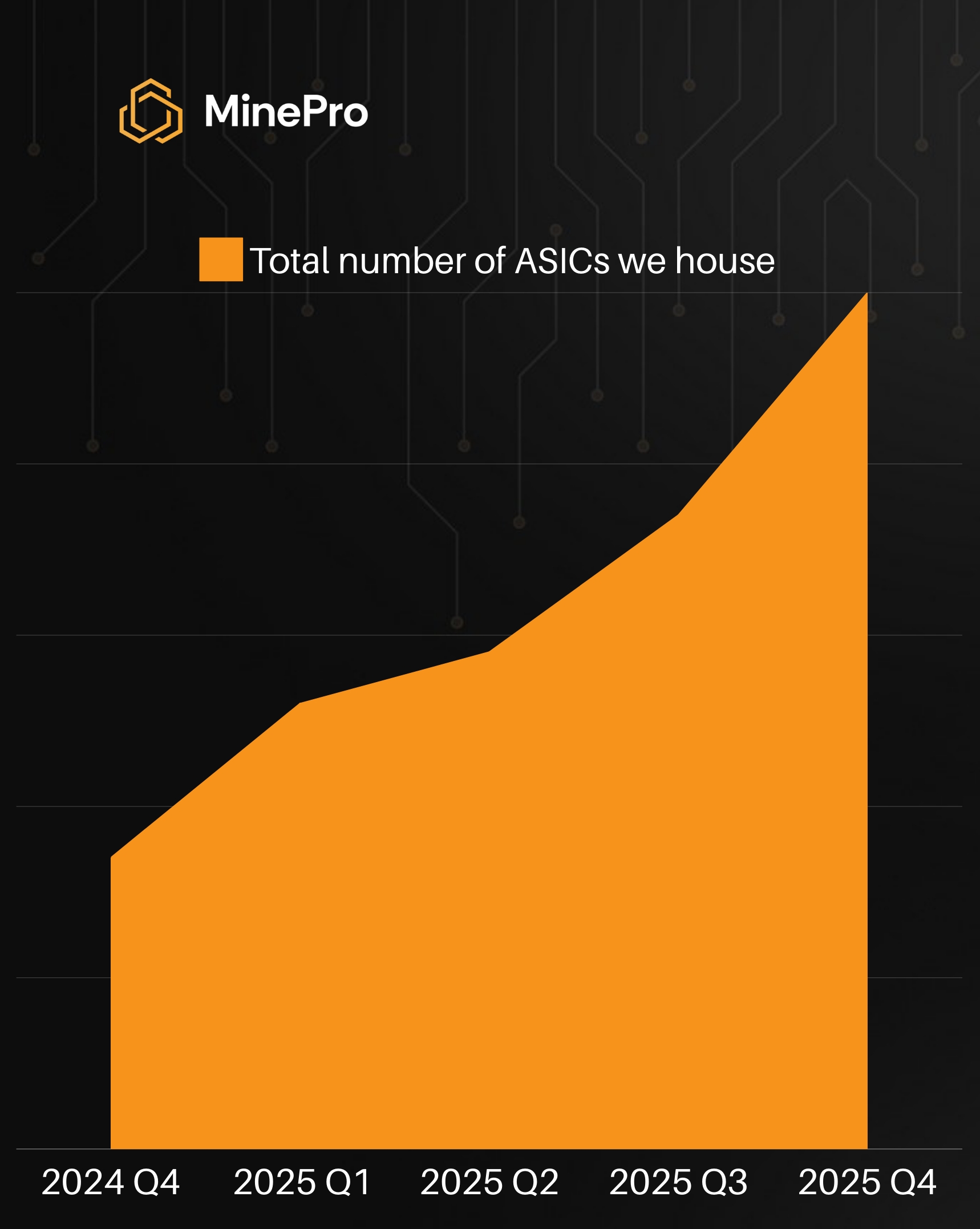
By building $MINE as a deflationary token, as well as running our hosting arm, MinePro prioritizes an increase in $MINE's yield percentage offering over time for staked investors. While it may seem counter-intuitive to reject a minting or traditional capital investment system for endless expansion of the amount of ASICs we house, we instead pursue a unique model wherein the offered yield percentage keeps increasing as the total supply of $MINE **decreases**, and the total amount of ASICs we house, as well as Bitcoin we yield monthly **increases. Meaning larger and larger monthly BTC rewards over time, with a lower and lower token pool for them to be shared to.**
**(note that both above graphics are projections)**
Through building $MINE's tokenomics in this fashion, we have created a trading environment which will also gain value on token price through the speculation of market participants trading $MINE.
This is the mechanism which most cryptocurrency projects derive their sole value from.
While MinePro is an outlier in terms of deriving value from a real revenue source, it does not mean we can't **ALSO** gain extra value from setting our token metrics up in a way which encourages speculation, creating value for the DAO in multiple ways.